






Scroll down for current highlights on the range of work and interests of featured faculty and students at UNBC School of Planning and Sustainability. For more information about UNBC, its planning program, students & faculty, visit www.unbc.ca/school-planning-and-sustainability.
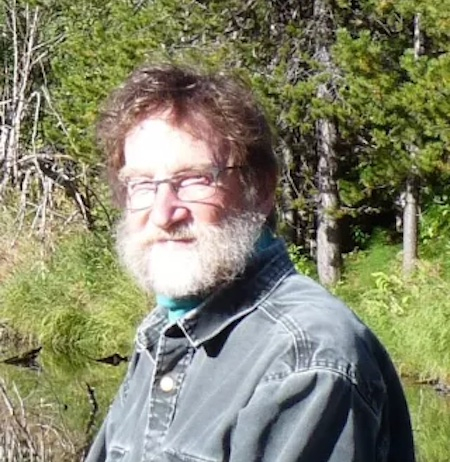
What makes you passionate about planning?
Two things make me passionate about public planning. First, I consider public participation in planning, especially in the setting of goals and objectives, but also in the choice of means, to be essential to democracy. Second, I have the strong feeling that humanity is accelerating towards the stone wall of environmental catastrophe, and Canadian citizens, no matter what their expertise in environmental planning, have a choice: defect (in game theory terms) and live for the moment, or do what they can to help alter the course of civilization – its future -- no matter how hopeless the effort may seem.
Tell us about a project you are working on and why it excites you.
After fifteen years or so in retirement, I have resumed conducting research. My big research question is what goes on in the minds of lay (non-expert) citizens when they experience being in natural or semi-natural environments versus when they are in built or urban or otherwise artificial environments. About a year ago I published a peer-review article in Parks Stewardship Forum (“Artifacts in the experience of ‘fuzzy’ nature’), and a second research paper is in the last stage of peer review at Environmental Conservation (“Sustaining Public Appreciation of Natural Autonomy in Conservation”). Currently I am working on a paper for Environmental Psychology (“The fractal complexity of intentions discernible in natural versus built environments”), invited by the editors-in-chief but to be peer reviewed. Contrary to common belief, academic research articles can have a large influence on the “real” world. An article of mine dating back to about 1994 resulted in the incorporation of the concept of childhood foraging in planning programs of Tokyo, Japan, a city of about 32 million people.
What do you think the most important challenge will be for planners in the future?
In coming years, because of climate change and environmental overshoot of other kinds, planners of all sorts, including urban, regional, and environmental, will face the challenge of working on plans meant to address the needs of a chaotic and unpredictable future, with diminishing resources and institutions breaking down.
What are you most excited about at your planning school?
UNBC’s School of Planning and Sustainability serves a huge area of lands undergoing natural resource development. Almost all of those lands are traditional territories of First Nations. In British Columbia, because the governments of the 19th and 20th centuries supposed they could warrant settler occupation without treaties, the First Nations now play a major role in how their traditional lands are to be developed, or simply used. That means the UNBC School of Planning, with its emphasis on First Nations planning, constitutes a kind of centre of excellence for research, teaching, and community outreach arising from its location in northern B.C. in an era of reconciliation between First Nations and the settler society.
Please tell us about a place or plan that has been influential to you.
For the past 26 years, my primary home has been in the Bulkley Valley, near Smithers. For someone who prizes natural and semi-natural landscapes and the privilege of living next door to grizzly bears, black bears, wolves, moose, elk, mule deer, whitetail deer, mountain goats, wolverines, eagles, salmon, and many smaller kinds of wild animals, plants, and fungi, residence here has been like inhabiting an earthly paradise. However, the Wet’sin’Kwa watershed is a paradise constantly exposed to unsustainable resource exploitation and plans devised with little or no understanding of how, historically, human populations almost always degrade their own environments. I participate in local or regional planning exercises, both formal and even more so informal, where I believe I can make a difference. My years of participation in the informal planning efforts especially have come to amount to much of who I think of myself as having been and who I am.

What makes you passionate about planning?
I’m passionate about planning because my two years working in forestry showed me firsthand how important it is to get land-use decisions right. With family roots in the mills and resource industries around Mackenzie and Prince George, I’ve always felt that tension between keeping northern economies strong and protecting the land and water that define our way of life. Planning is the field where I can actually help balance those things through better policies, reconciliation with First Nations, and sustainable development that lasts.
Tell us about a project you are working on and why it excites you.
Right now, I’m working on a GIS-based project mapping social vulnerabilities in the Prince George region, with plans to expand it to Wet’suwet’en territory. I’m pulling data from places like Data BC to show how resource development hits communities hardest. It excites me because I get to combine the practical field skills I learned doing forest health assessments with real mapping tools that can inform better planning decisions; stuff that actually respects local realities and Indigenous knowledge rather than ignoring them.
What do you think the most important challenge will be for planners in the future?
I think the most important challenge for planners in the future is integrating Indigenous reconciliation, climate adaptation, and sustainable resource use simultaneously. In northern BC, we’re dealing with species at risk, water sustainability, clean energy shifts, and changing social values, and you can’t just check those boxes separately. The successful planners will be the ones who create adaptive plans that respect relationships with the land and the people who’ve stewarded it for generations.
What are you most excited about at your planning school?
What I’m most excited about at planning school is being at UNBC, where everything is geared toward northern and natural resource planning. I love that I can bring my forestry background into classes on environmental ethics and GIS, and work on projects that directly address challenges in Prince George, such as sprawl and car-dependency. It’s the perfect place to build the skills I need before heading out into the field after graduation.
Please tell us about a place or plan that has been influential to you.
The downtown Prince George Development Permit Area guidelines have been really influential for me. When I analyzed buildings there for one of my classes, I saw how thoughtful regulations can shape a streetscape and make the core more walkable and inviting. It showed me how good planning can revive downtowns and connect people more closely to their community without requiring huge budgets.
